
Picture a winger from twenty years ago: he hugs the touchline, waits for the ball, beats his marker on the outside, and whips a cross into the box. Now watch a modern game. The winger starts wide, but the moment the full-back overlaps him, he drifts infield, almost into the space a number 10 used to occupy. Something fundamental changed in how this position is coached, and it did not happen by accident.
The shift toward inverted wingers, players who play on the opposite side to their strong foot and cut toward goal, is one of the clearest examples of tactics reshaping technical training. To understand why academies now drill inside movement instead of outside dribbling, it helps to look at what problem this actually solves, and what it costs a team when every winger does it.
How wingers used to be coached, and why that changed
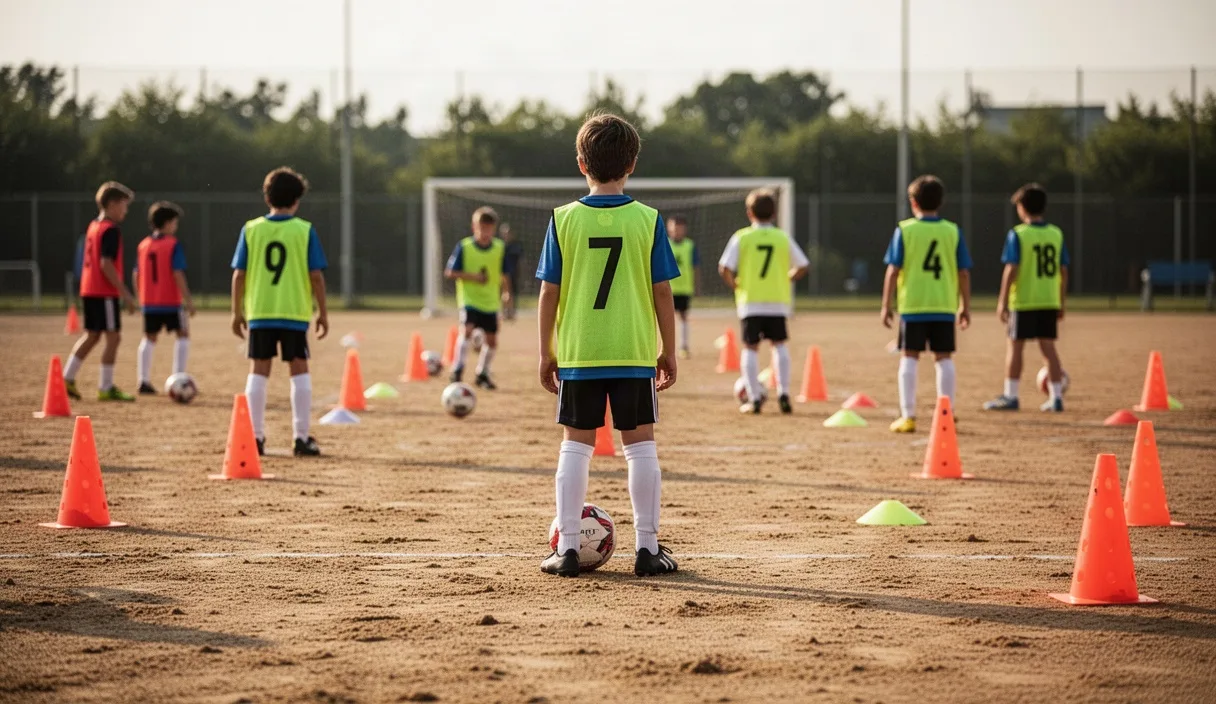
For most of football's history, wingers were taught one job: stretch the pitch and deliver crosses. Coaches placed cones along the touchline and drilled players to receive the ball with their back to goal, take it wide, and cross early. A player like Ryan Giggs in his early Manchester United years, or David Beckham on the right, built entire careers on this single skill set.
This worked because defenses were organized differently. Full-backs stayed deeper, and central midfielders rarely covered the width of the pitch. A winger staying wide created a genuine one-on-one battle, and crossing was statistically productive when boxes were less crowded.
Two things broke this model. First, defensive lines got better at zonal marking, which meant a stationary winger on the touchline became easy to track and double up on. Second, full-backs became more athletic and started pushing forward constantly, which meant the traditional winger's space on the touchline was often already occupied by his own teammate.
Once the full-back took over the wide lane, the winger needed somewhere else to go. Coaches began experimenting with moving him inside, and by the early 2010s this was no longer an experiment, it was standard positional instruction at academies across Europe.
The tactical reason for cutting inside
Think of the width of a pitch like a narrow street with two lanes. If both cars, the full-back and the winger, try to drive in the same lane, they collide. Splitting them into different lanes solves the traffic problem, and it also opens a second route to goal.
When a winger cuts inside, three tactical effects happen almost immediately:
- He drags a center-back or a defensive midfielder out of position, since someone has to follow him into that half-space between the center-back and the full-back.
- He opens the touchline for the overlapping full-back, who now has a clear run into space the winger has vacated.
- He becomes a goal threat rather than just a supplier, because cutting inside on his stronger foot lets him shoot rather than only cross.
This is why Arjen Robben, playing on the left but shooting with his right foot, became a template. Defenders knew what he wanted to do, cut inside and shoot, and still could not stop it, because the inside lane offered him a shooting angle that the touchline never could. Mohamed Salah at Liverpool follows the same logic on the right, scoring the majority of his goals by drifting inside rather than crossing from the byline.
The tactical reason, in short, is that width is now provided by full-backs, so wingers are freed up to attack the space that actually leads to goals: the zone just outside the penalty box, roughly 16 to 20 yards out, on the side of the shooting foot.
What this asks of a player's technical skill
Cutting inside sounds simple, but it demands a different technical foundation than staying wide. A traditional winger needed close control at speed and a reliable early cross. An inverted winger needs something closer to a central attacker's toolkit, combined with wide starting position.
Consider the specific skills that change:
| Traditional wide winger | Modern inside-cutting winger |
|---|---|
| First touch to control the ball with back to goal | First touch that opens the body toward the center of the pitch |
| Outside-foot dribbling to beat a full-back down the line | Inside-foot cuts to beat a full-back on the inside angle |
| Early crossing technique, often first-time | Low, driven shooting technique from the edge of the box |
| Peripheral vision toward the six-yard box | Scanning for a late-arriving midfielder or overlapping full-back |
The touch that matters most is the first one. A player receiving the ball facing the touchline must control it with the outside foot to keep the defender on his back. A player planning to cut inside must control it with the inside foot, angling his body 45 degrees toward goal before the defender can react. Academies now spend entire sessions on this single detail, because getting the first touch wrong removes the inside option before it exists.
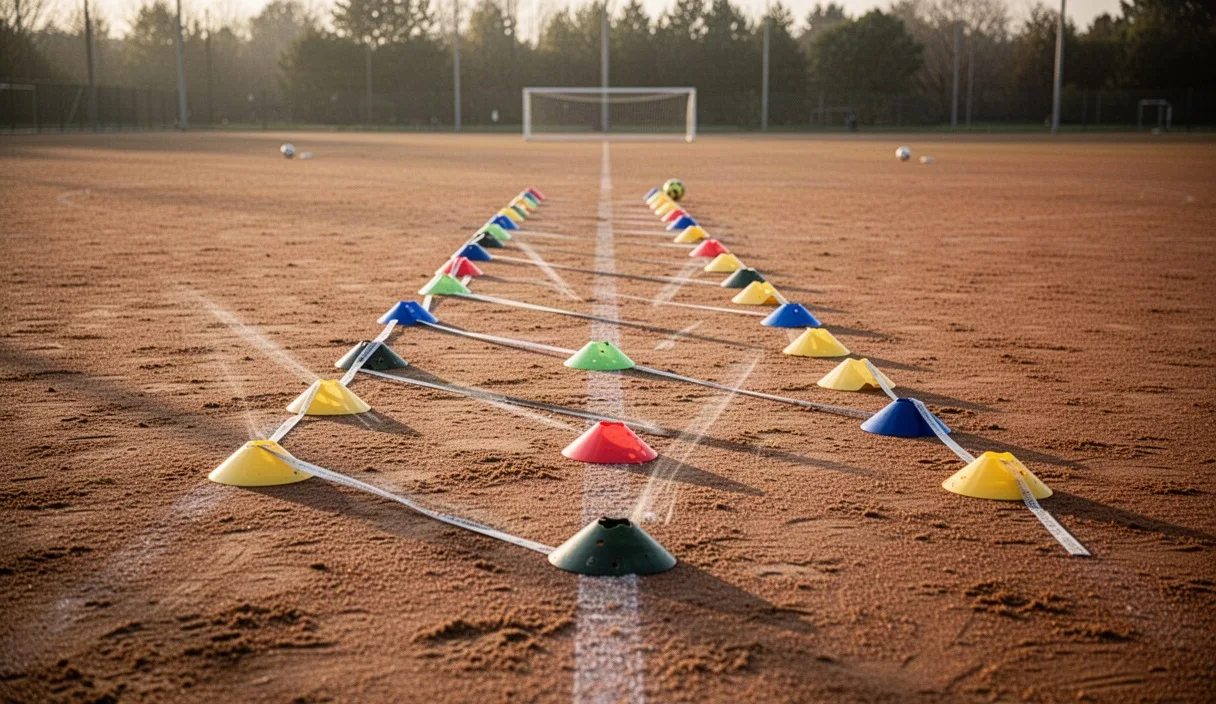
There is also a physical demand that gets overlooked: acceleration in a diagonal direction is a different movement pattern than a straight sprint down the touchline. Coaches at clubs like Ajax and Barcelona's academy build specific agility drills using diagonal cone runs, roughly 8 to 10 yards at a sharp angle, to train this exact motion.
The role full-backs now play because of this shift
None of this works without a full-back willing and able to provide the width the winger has given up. This is why full-back recruitment changed alongside winger coaching. Clubs stopped looking for defenders who simply defended well and started looking for players who could sprint 60 or 70 yards and deliver a cross under pressure.
Trent Alexander-Arnold at Liverpool is the clearest modern example. He plays right-back but often has more touches in advanced areas than the winger ahead of him, because Salah has cut inside and Alexander-Arnold has taken the outside lane. The same partnership logic applies at many clubs now: the winger and full-back essentially trade positions in the final third.
This creates a coaching dependency that is easy to underestimate. A winger trained only to cut inside becomes far less effective if his full-back does not overlap, because there is nobody covering the width he abandoned. Academies address this by pairing winger and full-back drills together rather than training them separately, often in small-sided games of 4 versus 4 focused specifically on the wide channel and half-space combination.
Downsides: what teams lose when wingers stop staying wide
The inside-cutting winger is not free of cost. When every wide player wants to drift infield, a team can lose the thing width was originally meant to provide: space.
Three specific problems show up regularly at both academy and professional level:
- Compressed attacking shape. If the winger, the number 10, and a central striker all occupy the same central zone, defenders no longer have to stretch across the pitch, which makes them easier to defend against.
- Overreliance on the full-back's fitness. A team built around inverted wingers can collapse tactically in the final 20 minutes of a match if the overlapping full-back tires, since there is no backup source of width.
- Loss of the classic cross as a weapon. Teams that abandon wide crossing almost entirely become predictable against low defensive blocks that pack the central lane, since there is no longer a threat coming from the byline.
This is why some of the best coaches, Pep Guardiola among them, use a mixed approach rather than a fixed rule. At Manchester City, wingers are coached to read the game and choose between cutting inside and staying wide depending on where the full-back and the opposition's shape are positioned, rather than being told to always do one or the other.
How academies train this movement today
Modern academy curriculums treat the inside-cutting movement as a decision-making skill, not just a physical pattern. A typical training progression looks like this:
- Isolated technical repetition. Players practice the inside-foot first touch and diagonal cut against a static cone, often 50 to 100 repetitions per session at younger age groups (under-13 to under-15).
- Passive defender introduction. A coach or teammate stands in as a full-back who does not fully contest, so the winger learns timing without pressure.
- Live one-on-one with a real full-back. This introduces the actual decision: cut inside now, or wait for the overlap.
- Small-sided games with positional constraints. A 5-vs-5 game where the winger and full-back on each team must alternate who takes the wide lane, forcing communication and awareness rather than habit.
Video analysis has become a standard part of this too. Academies at clubs such as Manchester City and Borussia Dortmund now review match footage with 15 and 16 year old wingers specifically to identify the moment a defender's hips open up, which is the visual cue that signals it is safe to cut inside rather than continue wide.
Common mistakes
The most frequent mistake among developing wingers is cutting inside on a fixed rhythm rather than reading the defender, which makes the movement predictable and easy to block. A second common error is cutting inside without checking whether the full-back has actually made the overlapping run, leaving the width completely empty. A third mistake, often made by younger players, is rushing the first touch inward before scanning the pitch, which results in running into a crowded central area rather than open space. Coaches generally correct these through repeated video review and small-sided games rather than isolated technical drills alone, since the mistakes are decision-based rather than purely technical.
Practical next steps
Players looking to develop this skill should start with the first touch, since everything else depends on it: practice receiving the ball on the half-turn with the inside foot until it becomes automatic under low pressure, then gradually add a passive defender. Coaches working with youth teams should pair winger training with full-back training rather than treating them as separate units, since the movement only makes tactical sense as a partnership. Anyone assessing a player's readiness for this role, whether a parent, a youth coach, or a scout, should watch specifically for scanning behavior before the ball arrives rather than raw speed or dribbling flair, since the decision of when to cut inside matters more than the physical ability to do it. As with any specialized technical or physical training plan for young athletes, working alongside a qualified coach or sports physiotherapist is the safer route when introducing new movement patterns, particularly around load and injury risk in the hips and groin associated with sharp diagonal cutting.